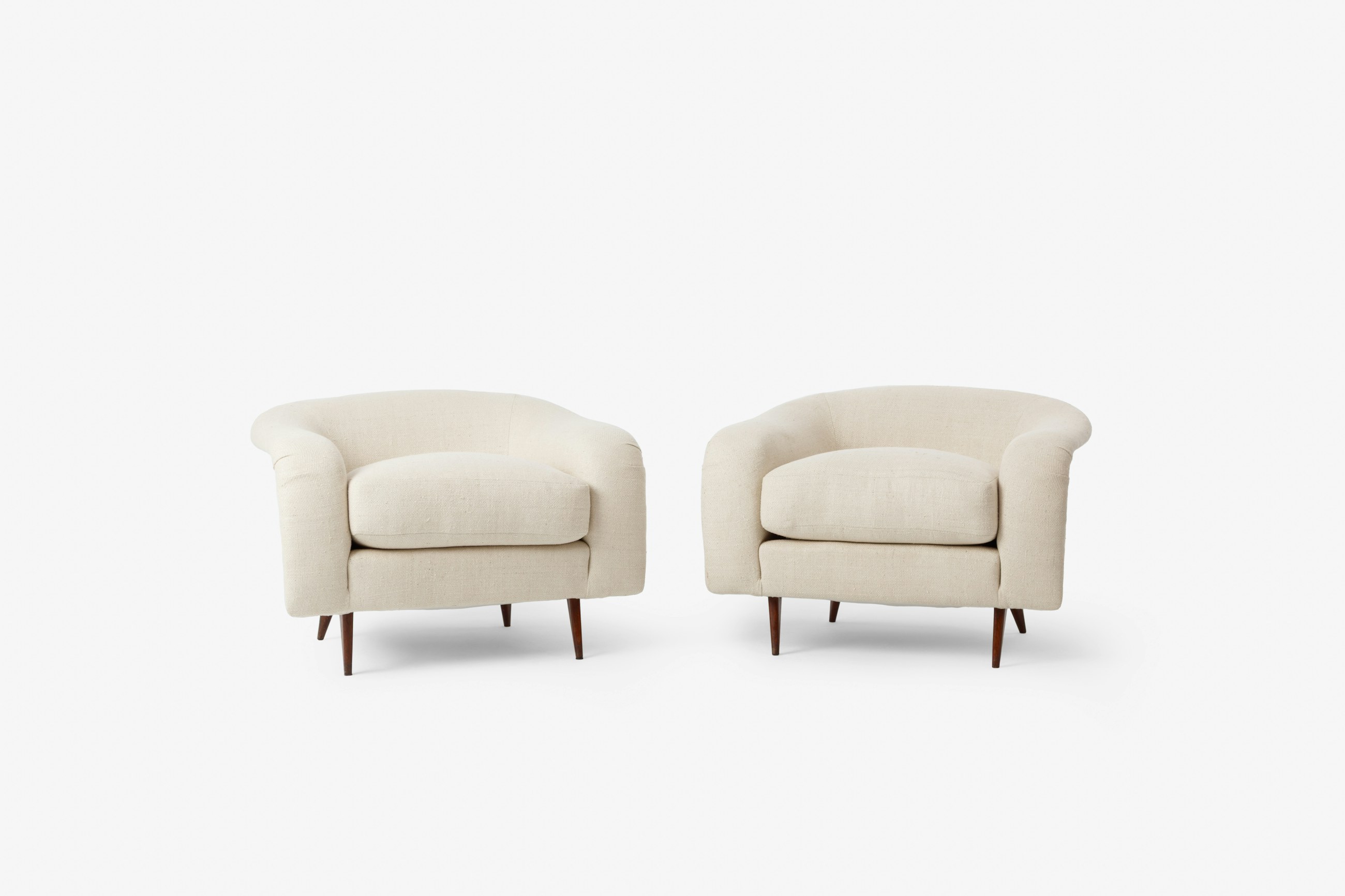
A master of restraint
Joaquim Tenreiro was born in Portugal in 1906 and emigrated to Brazil, where he revolutionized design by blending European woodworking traditions with the organic forms and materials of his adopted country. In the 1940s and 1950s, he introduced an aesthetic that rejected the heavy colonial styles of the past in favor of lightness, functionality, and elegance.
Lightness as a philosophy
Tenreiro spoke of furniture that was formally light, and he meant it literally and philosophically. His iconic works, including the Poltrona Leve, the Light Armchair, and the Cadeira de Três Pés, the Three-Legged Chair, balance modernist principles with Brazilian craftsmanship.
Working in native woods such as jacaranda, imbuia, and peroba, he showed a deep understanding of materiality and structure, elevating simplicity into elegance.
Why collectors prize him
Tenreiro's furniture was often made in limited quantities or as bespoke commissions, and it is now highly sought after by collectors and institutions worldwide. To hold one of his pieces is to understand how a chair can feel almost weightless while remaining quietly strong.