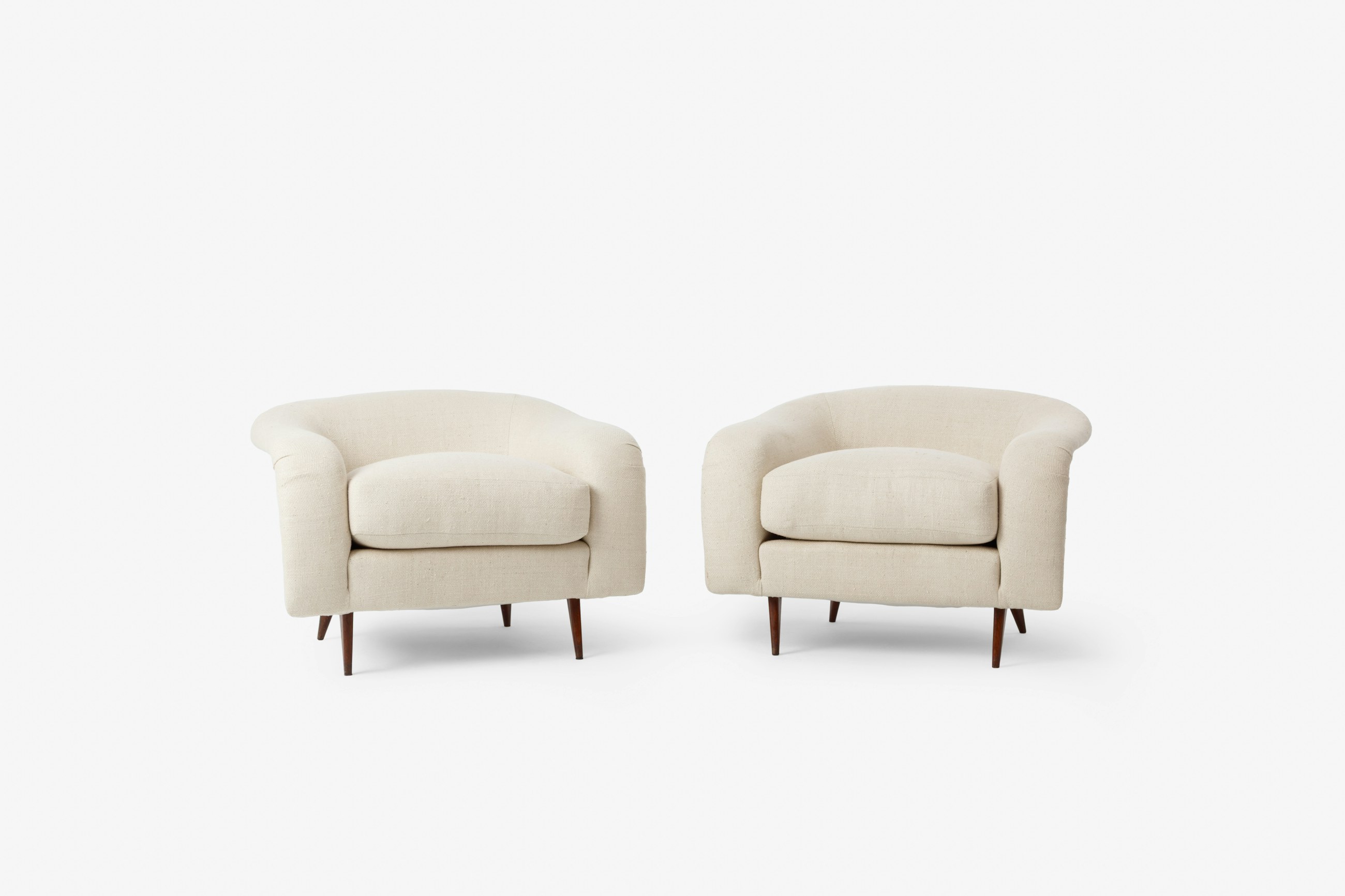
Joaquim Tenreiro
A pioneering figure of Brazilian modern design, widely regarded as the father of modern Brazilian furniture.
Joaquim Tenreiro (1906 to 1992) was a pioneering figure of Brazilian modern design. A master cabinetmaker who fused European craftsmanship with Brazilian materials, Tenreiro developed a language defined by lightness, restraint, and proportion.
His furniture, most often in native jacarandá, balances delicacy and strength, bridging tradition and modernity. Celebrated for elevating simplicity into elegance, Tenreiro remains central to the story of Brazilian modernism, his work embodying both functional clarity and poetic tension.
Born in Portugal in 1906, he emigrated to Brazil, where he revolutionized design by blending European woodworking traditions with the organic forms, materials, and sensibilities of his adopted country. In the 1940s and 1950s, Tenreiro introduced a new aesthetic that rejected the heavy colonial styles of the past in favor of lightness, functionality, and elegance.
His groundbreaking pieces, crafted from native Brazilian woods such as jacaranda, imbuia, and peroba, showcased his deep understanding of materiality and structure. His iconic works, including the Poltrona Leve, the Light Armchair, and the Cadeira de Três Pés, the Three-Legged Chair, embody a poetic balance between modernist principles and Brazilian craftsmanship.

Inquire about Joaquim Tenreiro
Ask Ulysses about available works, provenance, and sourcing.