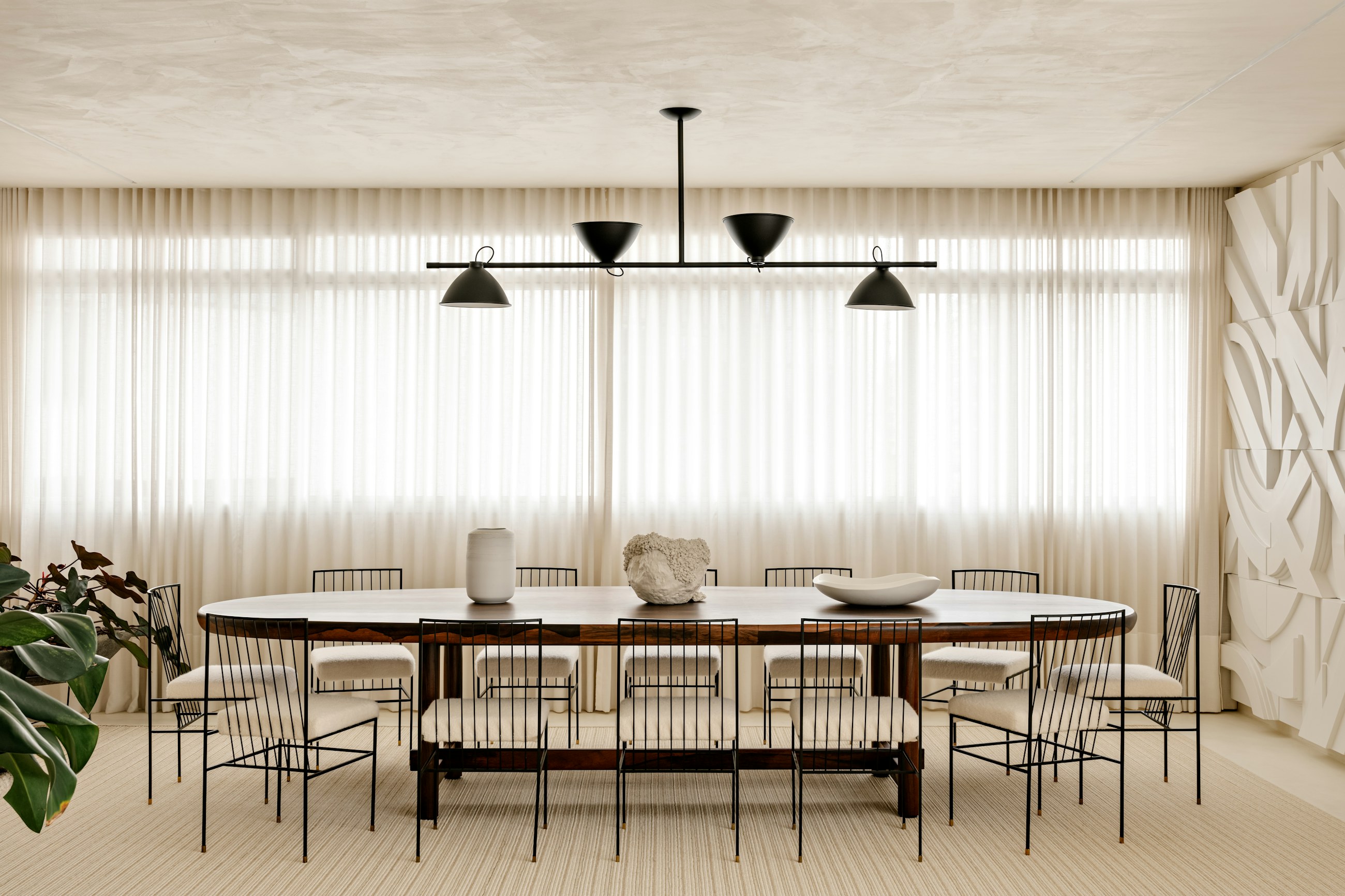
A movement rooted in place
Brazilian modernism emerged in the middle of the twentieth century as designers and architects reimagined European modernism through a distinctly Brazilian lens. Where the international style prized industrial materials and cool restraint, Brazil's designers worked in warm native hardwoods such as jacarandá, imbuia, and peroba, and in forms that answered to a hot climate and an abundance of light.
The result was furniture that felt at once modern and deeply human. It carried the discipline of modernism, clear proportion and honest construction, while keeping the warmth and craft of the workshop.
The makers who defined it
Joaquim Tenreiro, often called the father of modern Brazilian furniture, championed pieces that were, in his own words, formally light. Sergio Rodrigues gave the movement a generous, sculptural ease. Jorge Zalszupin merged European modernist rigor with the warmth of Brazilian materials.
Each worked in limited quantities and bespoke commissions. That scarcity, paired with real cultural significance, is part of why these pieces are so sought after by collectors and institutions today.
Why it still feels current
More than half a century on, the best Brazilian modernist design still reads as contemporary. Collectors, architects, and interior designers return to it for the same reasons: honest materials, clear proportion, and a quiet confidence that does not chase trends.
Placed thoughtfully, a single piece can shape an entire room. That is the quality that turns furniture into architecture, and a collection into a legacy.